
AI Crypto Mining: How It Actually Works
AI isn’t replacing crypto mining; it’s managing it. Here’s how AI actually functions inside mining infrastructure, cloud mining models, and real-world operations, and where its limits are.
AI isn’t replacing crypto mining; it’s managing it. Here’s how AI actually functions inside mining infrastructure, cloud mining models, and real-world operations, and where its limits are.

AI crypto is crowded with bold claims about coordination, autonomous agents, and superintelligence. This deep dive separates projects actually building something real from those running mostly on narrative.
What Artificial Liquid Intelligence (ALI) actually is, how its AI-avatar ecosystem works, and where it fits (and doesn’t) next to AGIX, FET, ASI, and OCEAN.

What the Artificial Superintelligence Alliance (ASI) actually is, how SingularityNET and Fetch.ai coordinate through it, and why Ocean Protocol walked away in October 2025.

Internet Computer (ICP) lets AI agents run directly on-chain through canisters, giving them persistent memory, low-latency compute, and verifiable behavior without relying on centralized servers.

Token Metrics ($TMAI) links its token to an AI-driven crypto research platform, though the company has since pivoted away from the analytics product this article originally described.
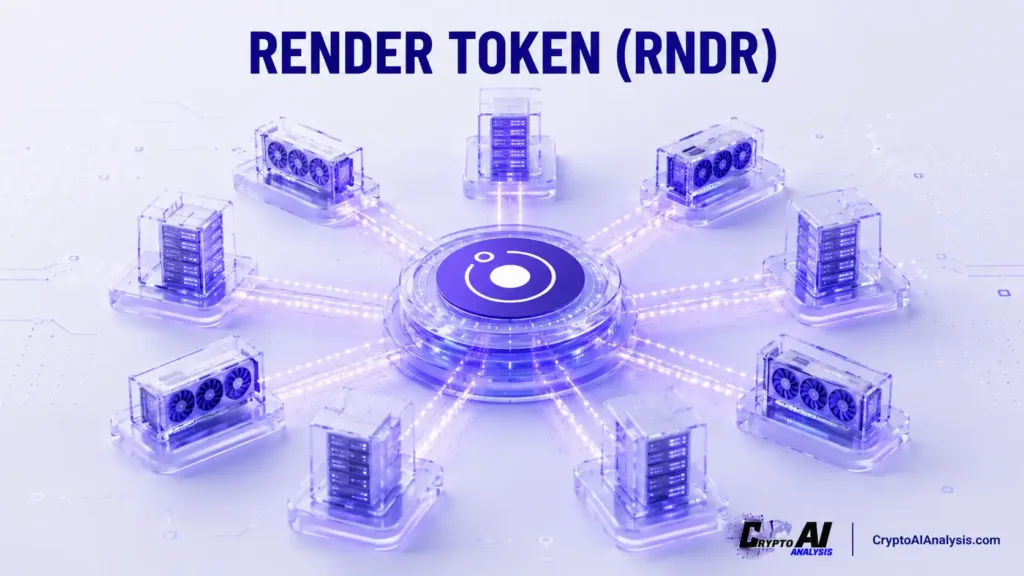
Render Token (RNDR) connects idle GPU capacity to creators, AI researchers, and studios that need rendering and compute power. This case study covers how the network works, its tokenomics, real partnerships, and how it compares to newer AI crypto projects.

Ozak AI (OZ) is a pre-launch DePIN and AI-agent project. Its tokenomics and roadmap are public and verifiable; whether the technology ships and finds adoption after launch is not, and that gap is the actual story here.

Ruvi AI (RUVI) combines AI-powered marketing tools with instant blockchain payments. This case study breaks down its presale tokenomics, roadmap milestones, and the specific claims that still need independent verification before launch.

Numerai (NMR) runs a global tournament where anonymous data scientists build machine-learning models on encrypted financial data, staking NMR tokens on their predictions to help power a real hedge fund. This case study covers how the tournament works, its token mechanics, and what’s changed since 2025.